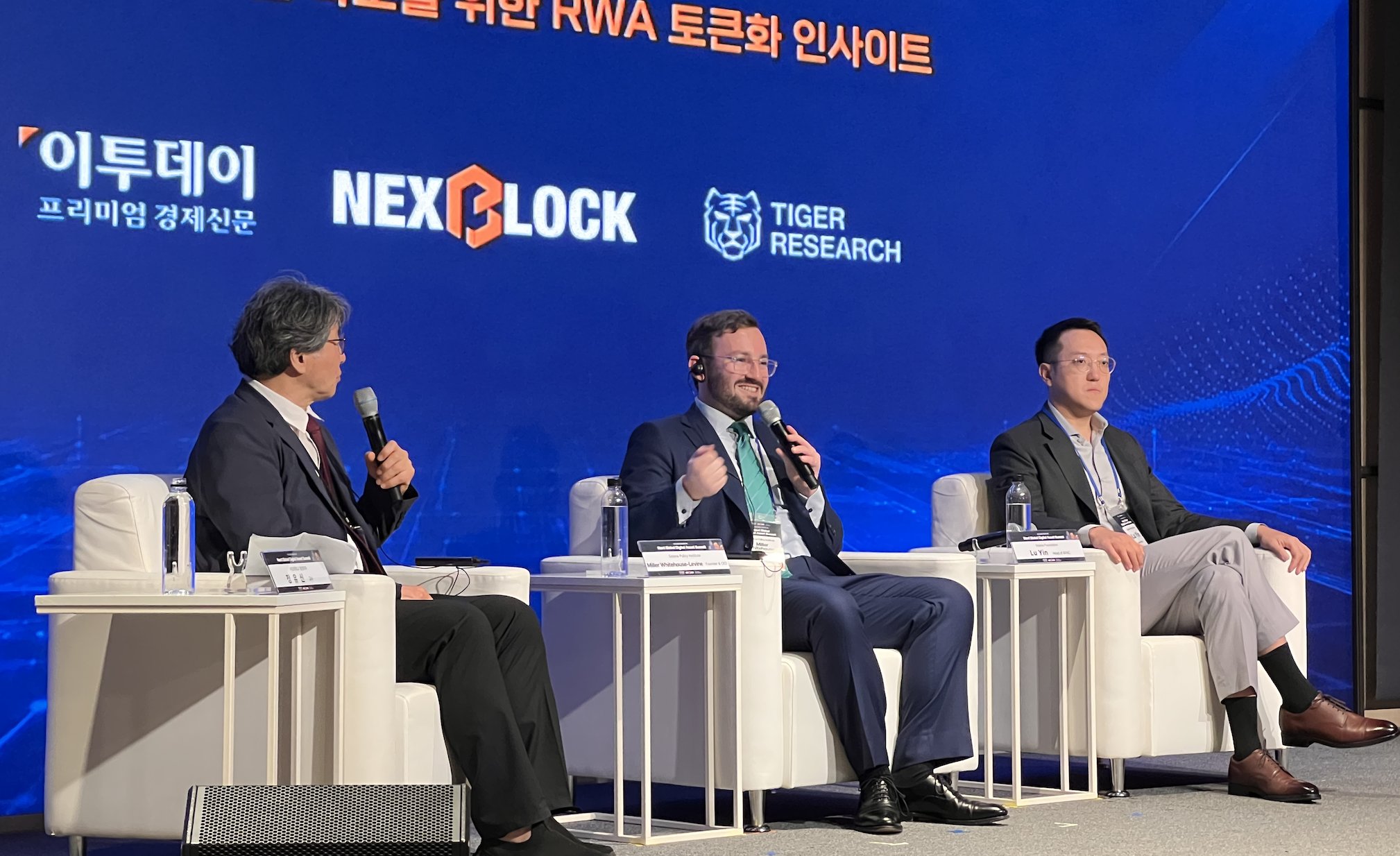
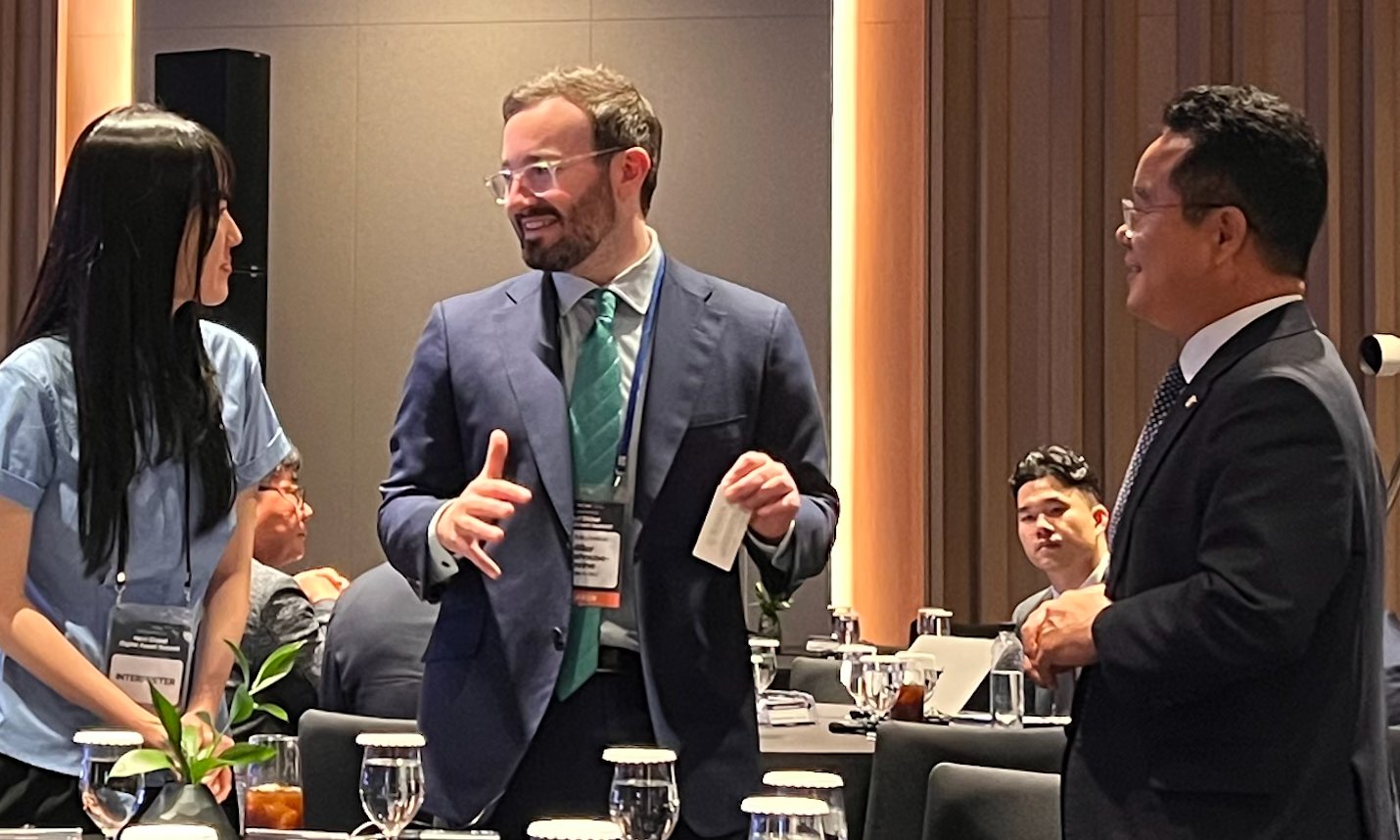
RWA related panel talk
- Professor Jung Yu‑shin, Sogang University
- Miller, Whitehouse‑Levin Solana Policy Institute, Founder & CEO
- Lu Yin (Lu Yin), Solana Foundation, Head of APAC
💡 1. Clear definition of RWA (by Miller)
There is no single globally agreed definition of RWA, but Miller defines it as “tokenizing traditional assets by bringing them from off‑chain to on‑chain so they can be traded”.
🚀 2. Why is RWA hot right now?
At least in the United States, the current stance toward crypto and digital financial rails is friendly. Traditional financial institutions are also following the government’s governance lead and are conducting various tests in line with regulatory and legal system improvements. The attitude of financial institutions that were once very skeptical of blockchain is changing.
⚖️ 3. US regulatory environment and election variables (by Miller)
The SEC, CFTC and others are currently rule‑making, but the Clarity Act remains uncertain. The House has passed it, but Senate approval is the key. If the opportunity is missed due to this election and the bill does not pass this year, it could drift for the next decade. I personally estimate a 50% chance of passage.
🥊 4. Traditional finance vs crypto: Is there tension?
In short, it’s not tension but complementary growth of the two markets. Under the Trump administration, there is a strong push to build institution‑ and payment‑centric infrastructure, and digital players like Visa and Mastercard are also building smart‑contract infrastructure.
Lu Yin (Solana Foundation APEC) also says it’s hard to see tension. Crypto‑native startups that grew from 2020‑2024 are now being M&A’d by traditional finance players, and “licensing games” such as Western Union’s Solana‑based stablecoin launch or the JP Morgan‑BoA consortium are becoming more mature.
💵 5. Dollar tokenization and the inevitability of RWA
Global M2 money supply is about $32 trillion, whereas stablecoins account for only a few tens of billions, just 1.5‑1.7%. In the future, as RWA necessitates recapturing dollar interest rates, dollar tokenization will accelerate. Based on an efficient and centralized infrastructure (Solana), RWA will gradually find its place.
🌏 6. APEC (Asia‑Pacific) market vs the decisive difference with the US
The direction of the US SEC is clear. It is friendly to the US and wants USD to spread globally as easily as possible. In fact, about 98% of on‑chain transactions are USD‑based today.
The US government, while enforcing regulations, provides “Flexibility” to create an environment for various tests, which has greatly helped the expansion of USD stablecoins. In contrast, stablecoins based on KRW, HKD, or SGD face considerable regulatory constraints and white‑list/black‑list rules remain vague.
🔮 Conclusion: The future of Cashleg and liquidity
With technological advancement, once a regulatory framework is in place, anyone can easily tokenize various assets. Going forward, multiple players with secured liquidity (Cashleg) will intensify the flow of asset on‑chainization worldwide.
🔰 Personal thoughts
I liked that the panel talk wasn’t overly focused on Solana. They gave a Solana bragging segment for the last three minutes, but that amount seems acceptable. Overall, because the moderator from Sogang University conducted the session in English, it was hard to grasp the intent behind the questions. The understanding of the ecosystem seemed high, but the language barrier was a drawback. (It would have been better in Korean, but the panelists were foreign…)
Seeing the differences between the US and APEC, the likelihood of the Clarity Act actually passing in the US, and the fact that the US SEC is pushing for free use of USD on the blockchain, all provide insights that Korea needs to speed up.
@solana @millercwl
 Solana (SOL)
 Lou Media Exchange_Rep B4.99K @Lou_Frang
 Cointelegraph Media Influencer D2.94M @Cointelegraph
 310 53 21.50K Ler original >Tendência de SOL após o lançamentoAltista
 cryptorewolucja FA_Analyst OnChain_Analyst C14.76K @cryptoawos
 Token Terminal 📊 D159.71K @tokenterminal
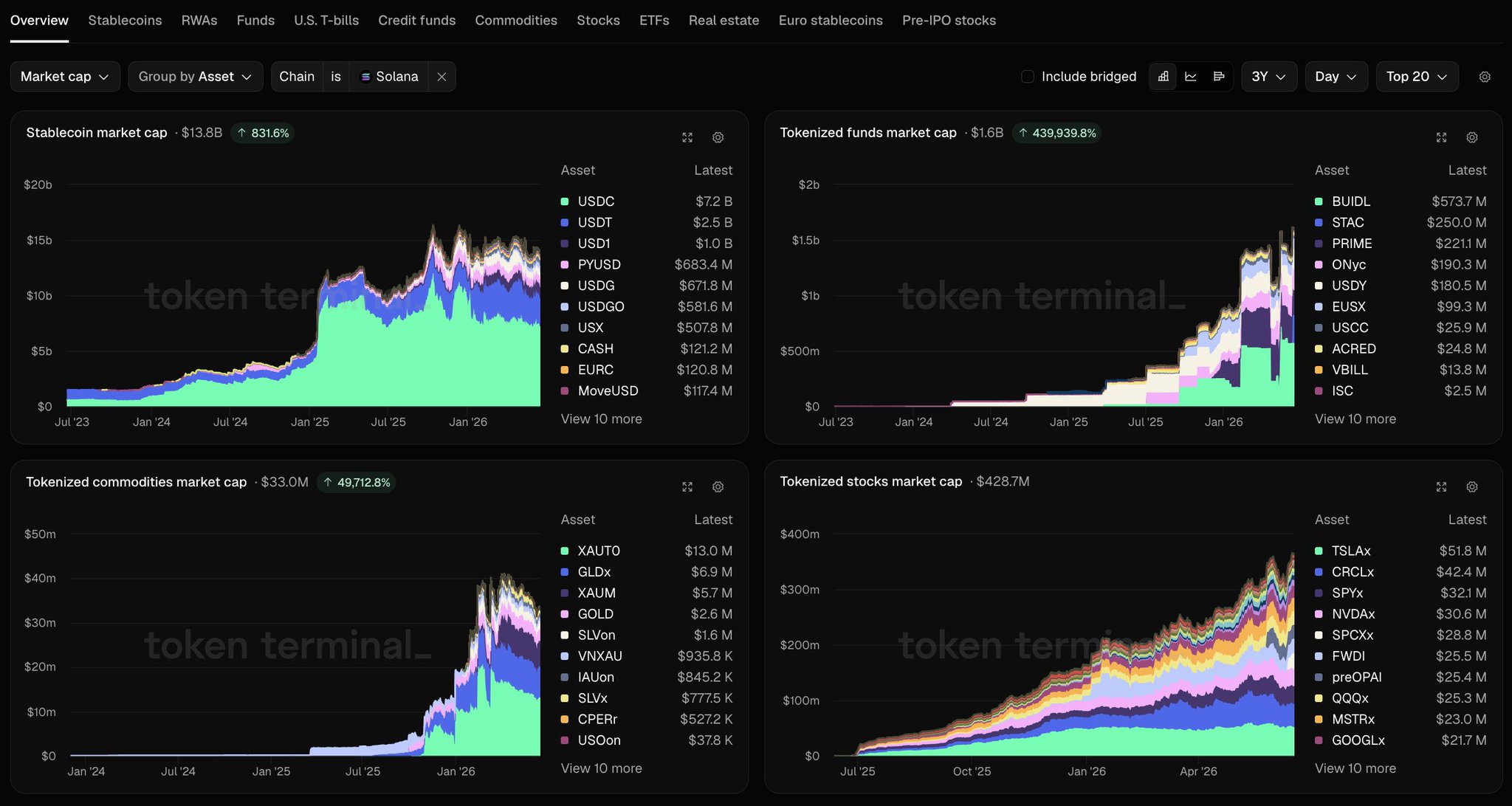 2 0 58 Ler original >Tendência de SOL após o lançamentoExtremamente Bullish
 RC Markets TA_Analyst Trader B1.80K @_rcmarkets_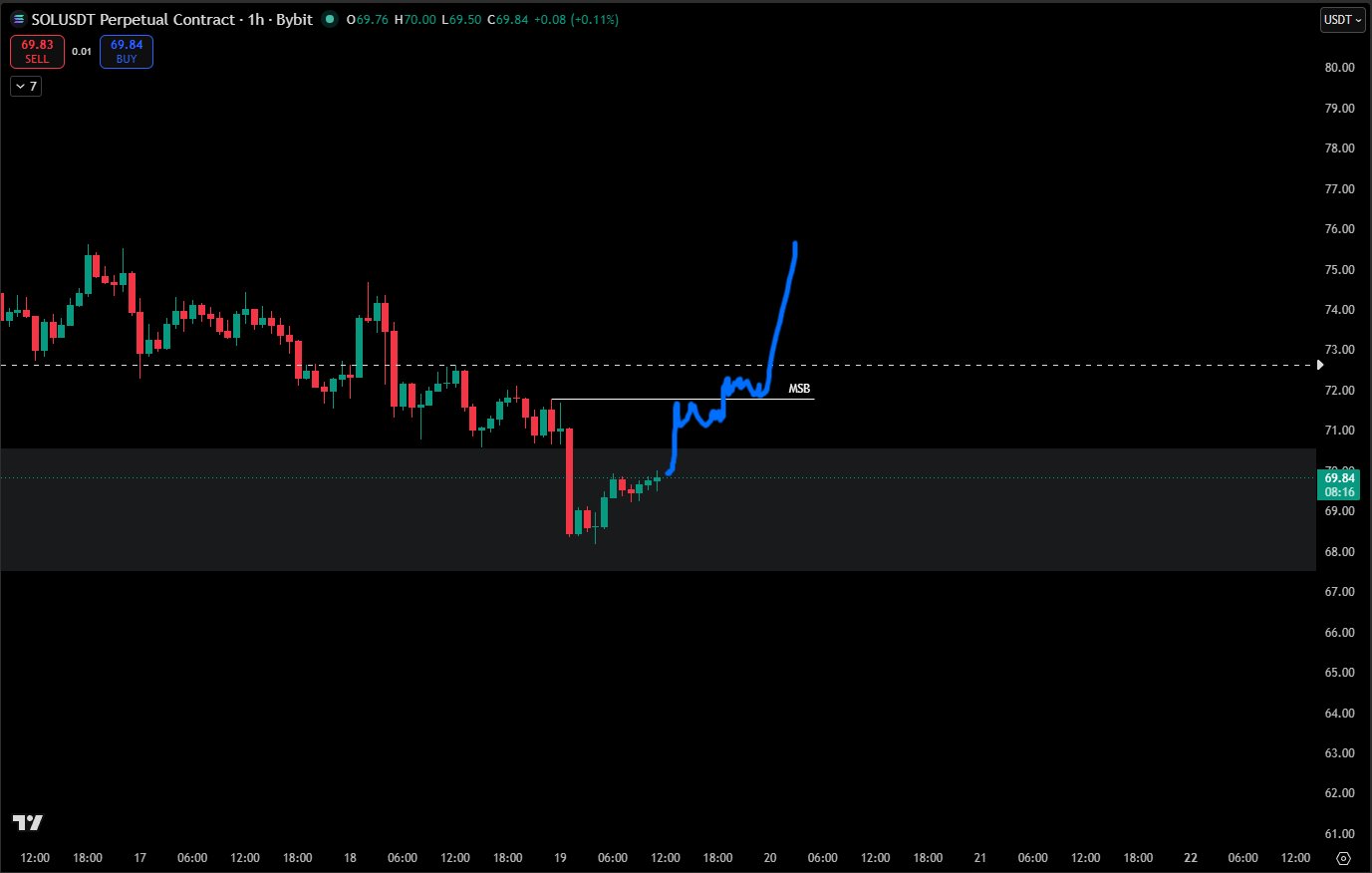
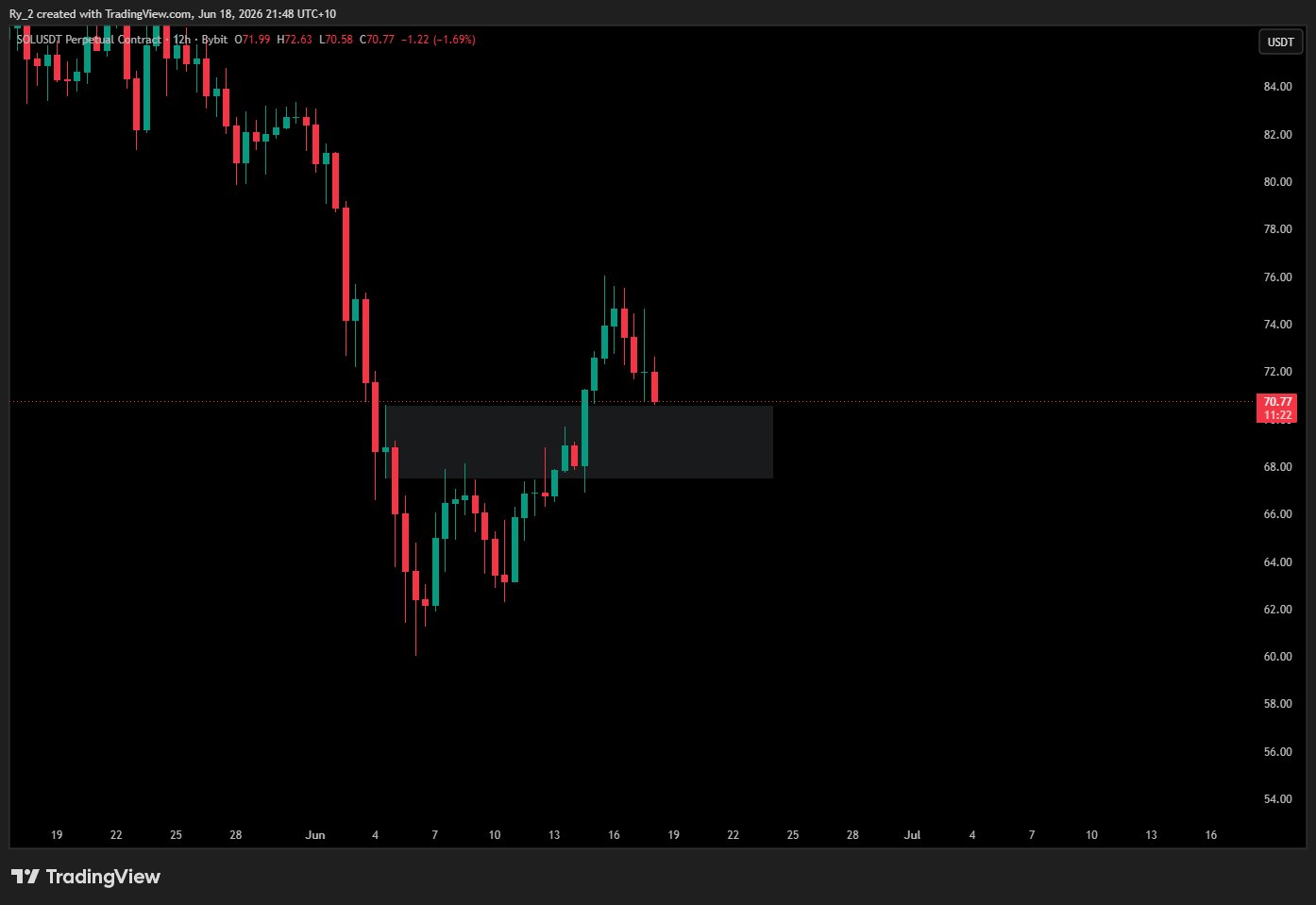
 1 0 65 Ler original >Tendência de SOL após o lançamentoAltista
 jayplayco Founder FA_Analyst B9.64K @jayplayco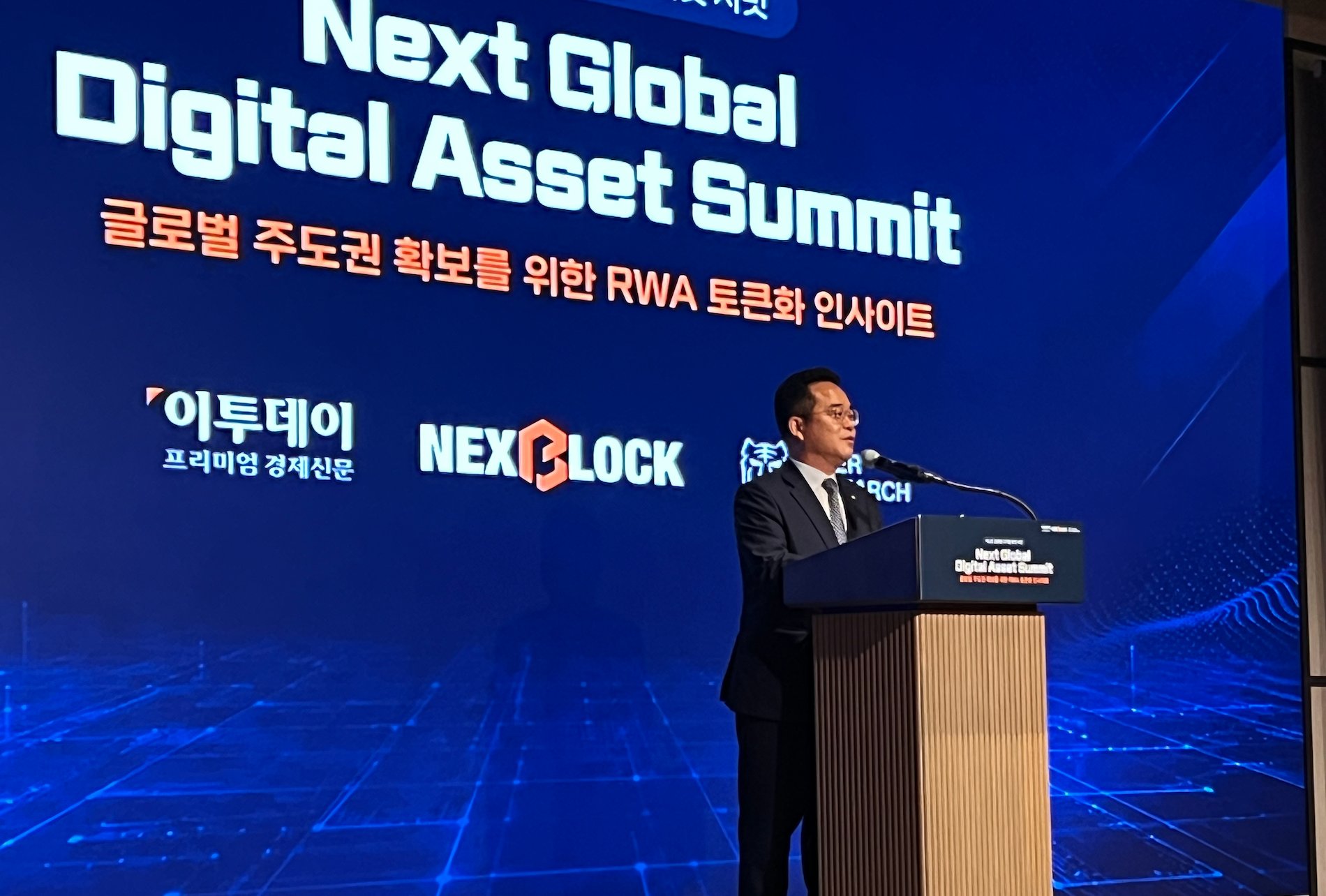
 4 0 322 Ler original >Tendência de SOL após o lançamentoAltista